
 Polski
 English
Prosthetics
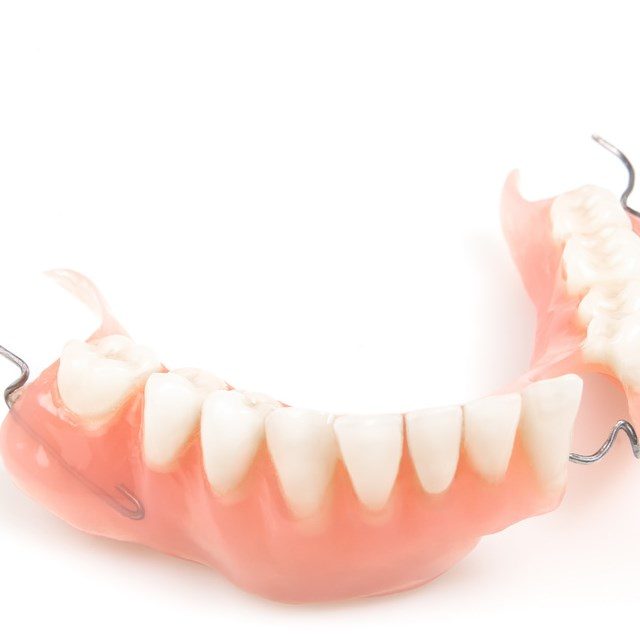
Prosthetic treatment involves permanent reconstruction or restoration of missing teeth. Present day dentistry offer a wide range of methods to choose from. With regards to prosthetics. At Smile4Life we only work with high quality materials and cooperate with experienced prosthetic laboratories.
At Smile4Life our specialists can offer
Crowns
Crowns which are an artificial restoration that fits over the remaining part of a prepared tooth, making it strong and giving it the shape of a natural tooth. A crown is sometimes known as a ‘cap’. Crowns are an ideal way to repair teeth that have been broken, or have been weakened by tooth decay or a very large filling. Crowns can be made of a variety of different materials. At Smile4Life we currently offer:
- Porcelain bonded to precious/non-precious metalmost common type, metal base is made and then porcelain is applied in layers over it.
- All ceramicthese crowns are made entirely out of porcelain. This modern technique offers a metal-free alternative, which can give the strength of a bonded crown and the appearance of a porcelain crown. They can look very natural and are most often used for front teeth.
- Porcelain bonded to zirconiaused both for front and side teeth, its core is made of zirconium oxide and then porcelain is applied in layers over it
- Compositeused primarily as a temporary measure
- Gold-alloy crowngold is one of the oldest filling materials. Today it is used with other metal alloys to increase its strength, which makes it very hardwearing. These crowns are silver or gold in colour.
- Inlays/onlays/overlaysalternative to regular fillings, mostly used in situations when the cavity goes below the gum line or when there is a problem in re-establishing a contact point with an adjacent tooth.
Veneers
which are a thin layer of porcelain made to fit over the front surface of a tooth, like a false fingernail fits over a nail. There are two main types of veneers:
- compositemade of composite material commonly used to fill tooth cavities. They have high aesthetic value, but display lesser durability than porcelain veneers.
- porcelainmade of porcelain, extremely strong, semi-transparent material which imitates dental enamel’s colour, level of transparency and the way of reflecting the light. Porcelain veneers are completely resistant to dental caries and strong discolourations.
Dentures
which are used to replace missing teeth for people with no remaining teeth. They may also be used for people who have lost several teeth. In this case, the appliance is called a partial or overdenture. Tooth loss may result from periodontal disease (gum disease), tooth decay, or traumatic injury. It is very important to replace missing teeth. The ill effects of not doing so can be a shift in remaining teeth, an inability to bite and chew properly, as well as a sagging facial appearance, which makes one appear older than they are. The beauty of today’s dentures is that they are designed to be comfortable and functional. They are very similar in appearance to natural teeth, and can improve a smile or facial appearance.
There are two main types of dentures:
- skeletalremovable prosthetic devices. Used when there are too many missing teeth to be replaced by a bridge. They are made of metal and do not put excessive pressure on the gums thanks to their clasp-fitting system.
- acrylicreplace all or most of the teeth. The upper part covers the entire palate, and the lower horseshoe shaped part is made to fit the tongue.
The missing teeth should not be ignored because the consequence of leaving gaps in the dentition without a prosthetic supplement may be:
- change of facial features, and thus loss of youthful appearance
- formation of a greater number of mimic wrinkles
- disorders of the appearance of the lips, their harmony and profile
- shortening the section between the nose and the chin, causing facial distortion
- problems associated with chewing food
- digestive problems as a consequence of abnormal chewing
- acceleration of the process of atrophy of the alveolar processes of the jaw and mandible